
Medical Device Patents That Protect Healthcare Innovation
If we build a better catheter, diagnostic tool, or mobility device, a strong prototype is only part of the job. We also need medical device patents that turn technical work into a business asset.
For healthcare manufacturers, copycat risk starts early. A supplier sees a demo, a rival spots a launch, or a former partner files around the same idea. Early patent attorney services often help us protect what is new before the market gets crowded.
Strong protection gives us room to grow. It lets us sell, license, raise capital, and keep improving without leaving the core idea exposed.
What makes a medical device patentable?
A medical device can qualify for patent protection when it is new, useful, and more than an obvious tweak to what already exists. In plain terms, the device needs a real technical difference. That difference can be small in size, but it must matter in function, performance, safety, or design.
This review starts with what is already public. Earlier patents, product manuals, journal articles, and conference materials can all count. The Medical Device Innovation Handbook's patent basics gives a solid explanation of why prior patent literature matters so much at this stage.
The parts of a device that may be protected
Patent protection can cover more than the full product. In many cases, the strongest filing focuses on the feature that gives the device its edge.
That may be the way a surgical tool locks into place, the structure of a catheter tip, a sensor layout, a material choice, or a software-driven control that improves device performance. Sometimes the look of the product matters too, and a design patent may protect that visual appearance. More often, utility patents cover how the device works.
For wheelchair makers and other hardware-driven companies, this point matters. A better hinge, brake, grip surface, or folding mechanism may be the true source of value. If we only describe the finished product in broad terms, we may miss the feature that deserves the strongest claim.
Why timing matters before public disclosure
Timing can make or break patent rights. If we show the device at a trade event, post it online, or share detailed drawings without the right guardrails, we may weaken our position.
Public disclosure can start the clock in the U.S. and close doors overseas.
Although U.S. law may leave some room after a disclosure, delay still creates risk. Foreign rights can disappear sooner, and later filings often become harder to defend. Because product development moves fast, it is smart to review patent options before the first public demo, investor pitch, or unrestricted partner meeting.
How patent protection supports healthcare innovation
Healthcare products take time and money to build. Testing, tooling, quality systems, and regulatory work all add cost. Without patent protection, a rival can wait on the sidelines, copy the best features, and avoid much of that early expense.
That is why patents matter beyond the legal file. They support the business case for the product itself.
Turning a device into a business asset
A granted patent, or even a strong pending application, can raise the value of a young company. Investors often want proof that the core product is not easy to copy. Strategic partners want to know who owns the technology. Buyers care about what rights come with the product line.
The business effect is real. A good patent portfolio can support funding, deal talks, and future licensing. This overview on why patents matter for medical device innovators makes that point well. When we can show protected features, we are not selling only a prototype. We are selling market position.
Why strong protection matters in crowded markets
Healthcare markets move fast, and similar products often appear within a short window. If our device improves safety, ease of use, cleaning, portability, or precision, competitors may try to build around it quickly.
Patent rights help us hold ground while the market learns our product. They also give us options if a rival launches a close copy. That matters for hospital devices, home-health tools, wheelchair products, and even adjacent industries like construction tools or military equipment. In each case, a small engineering gain can carry real commercial value.
Regulatory clearance and patent rights solve different problems. One helps us sell lawfully. The other helps us keep others from copying the invention.
Where patent attorney services fit into the process
This is where patent attorney services add value. Good legal support helps us spot what is truly protectable before we file. That includes the main mechanism, likely variations, fallback positions, and features a competitor might copy with small changes.
Just as important, sound counsel matches the filing plan to the business plan. If the goal is fundraising, the strategy may focus on core differentiators. If licensing is likely, broader claim coverage may matter more. Filing paperwork is only one part of the job. The larger task is building protection that fits the product and the market.
The patent process for medical device companies
Patent work follows a sequence, but each step shapes the next one. Careful preparation early on can save time, reduce risk, and improve the final protection.
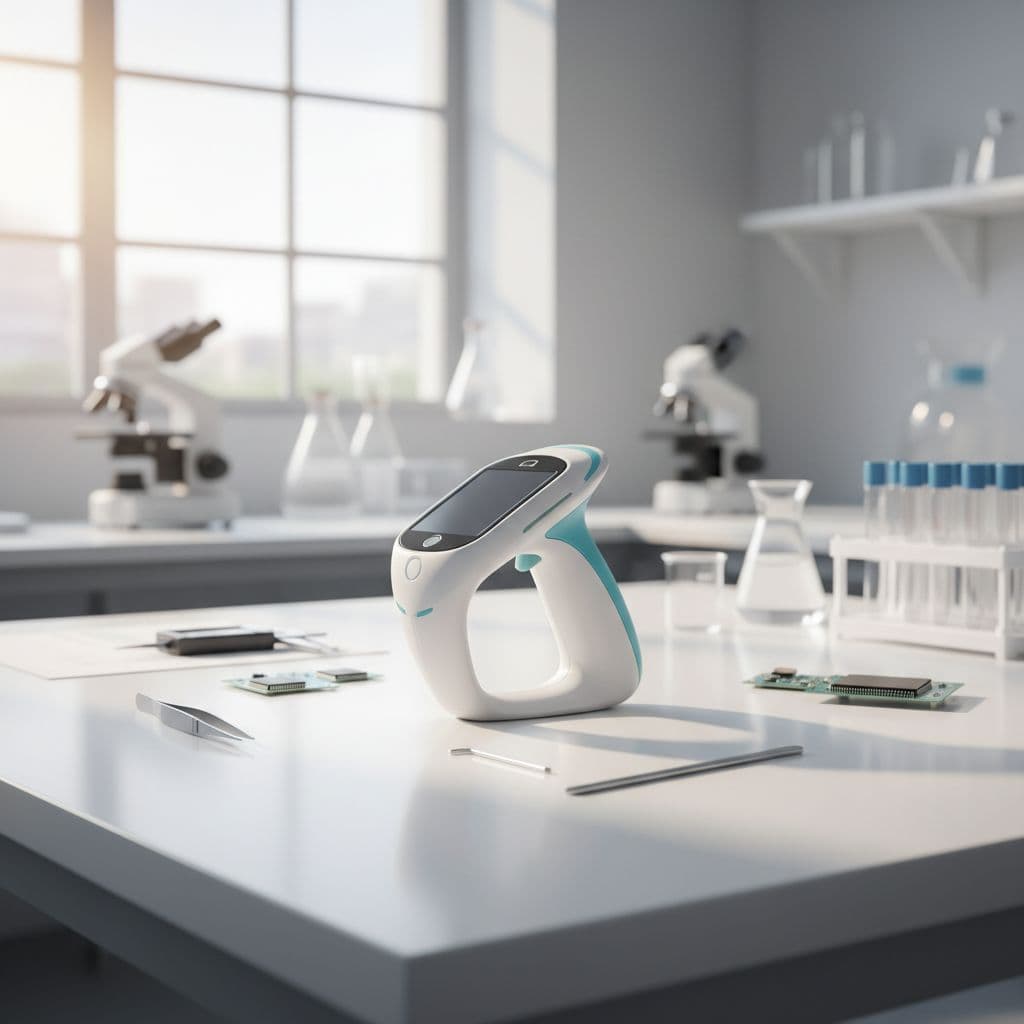
From invention review to filing strategy
The process usually starts with an invention review. We look at how the device works, what problem it solves, what features matter most, and where competitors may attack. After that, a prior art search helps us compare the concept against public material.
Next comes filing strategy. We decide what belongs in the first application, what should stay confidential for now, and whether future versions deserve separate protection. A strong filing does not read like a product brochure. It describes the invention in enough detail to cover useful variations, not only the first prototype.
That strategy works best when we understand both the device and the market. A hospital monitoring tool may need a different claim focus than a wheelchair frame component or a defense-related sensor housing.
Working through examination and office actions
After filing, the U.S. Patent and Trademark Office reviews the application. Examiners often raise objections based on earlier patents or on how the claims are written. Those office actions are normal.
The response matters. If we answer too narrowly, we may win the patent but lose meaningful coverage. If we answer too broadly, the application may stall. Good prosecution takes precision, patience, and a clear view of the business goal behind the filing.
Keeping protection alive after the patent is filed
Patent work does not stop once the application is on file. We still need to watch deadlines, review continuation options, and monitor the market for close copies. After grant, U.S. utility patents also require maintenance fees at set intervals.
A patent portfolio can support more than exclusion. It can also improve our hand in negotiations, licensing, and dispute resolution. This patent protection analysis for medical device companies explains how patents can work both as protection and as business leverage in deal-making.
Common mistakes that weaken medical device protection
Most weak patent positions do not fail because the product lacks merit. They fail because the company moved too late, filed too narrowly, or treated patent work as a formality.
These mistakes are common, but they are also avoidable.
Narrow filings that miss the bigger value
A narrow filing may focus on one exact version of the device and ignore useful alternatives. That creates room for a competitor to adjust a shape, swap a component, or change a sequence and still capture the same market.
Broader thinking usually leads to better protection. We need to ask what feature drives the benefit, how else it could be built, and what substitutes a rival may use. The best claims often cover the core function and several practical versions of it.
Poor documentation and rushed decisions
Weak records create real problems. If notebooks are incomplete, drawings are inconsistent, or engineers share different versions of the invention, patent drafting gets harder. Rushed public disclosure makes it worse.
Trade shows, marketing drafts, investor decks, and supplier outreach should all be checked for patent impact. Clear invention records, dated design updates, and organized review steps make later filings stronger and easier to defend.
Ignoring trademarks and other IP tools
Patents are powerful, but they are not the only tool. If a device name, product family, or house brand carries trust in the market, trademark protection may matter too.
That is often true in healthcare, where buyers remember names tied to reliability and safety. A smart IP plan may combine patents for the technology, trademarks for the brand, and confidentiality rules for know-how that should stay private.
How we protect medical device ideas for the long term
The best patent plan fits where the company is now and where the product is headed next. That is true for medical device firms and for manufacturers in automobile parts, construction tools, wheelchair products, and military equipment. All of us need accurate protection that supports growth, not paperwork that sits in a drawer.
Matching protection to the product life cycle
Early on, we may focus on the first concept and the features that make it stand out. Later, the plan may expand to improved versions, accessories, manufacturing methods, or licensing rights tied to a broader portfolio.
That flexible approach matters because products change. Clinical feedback leads to redesigns. Market demand shifts. New competitors enter. A patent strategy should grow with the roadmap, so each filing supports the next stage of the business.
Building trust through clear communication and accuracy
Good legal support should feel clear and organized. We need plain explanations, accurate drafting, and steady follow-through on deadlines and strategy choices. That level of care builds trust, especially when launch schedules are tight and product details keep moving.
Strong patent attorney services also keep the work tied to business goals. That means knowing when to file, what to protect first, and how to keep the portfolio useful over time.
Conclusion
Healthcare ideas create value only when we can protect them long enough to build around them. Medical device patents help us hold our market position, support investment, and keep improving products that matter to patients and providers.
The best time to act is early, while the invention is still taking shape. With the right patent attorney services, we can protect the idea, support the launch, and keep a strong healthcare solution from becoming someone else's shortcut. Contact Milano IP to discuss your medical device patent strategy.
Get a Free Case Evaluation
Tell us your details and we'll get right back to you.
Blog Contact Form
Like our article? Share our Article!