Design Patent vs. Utility Patent: Which Fits Your Product?
Many products need protection for how they look, how they work, or both. If we're bringing a medical device, vehicle part, construction tool, wheelchair product, or defense component to market, that choice affects budget, launch timing, enforcement strength, and long-term business value.
Early legal guidance matters because a weak filing can leave the best part of the product exposed. Strong patent attorney services help us choose the right path before launch, reduce avoidable risk, and protect the features that actually drive sales.
What design patents protect, and when they fit best
A design patent protects a product's visual appearance. It does not protect the way the product works. Instead, it covers the ornamental look, such as shape, contour, surface decoration, lines, and styling that give the product a distinct identity in the market.
That matters when appearance helps buyers recognize the product at a glance. It also matters when the functional invention is protected somewhere else, but the visual form still deserves its own layer of protection. For many physical products, the outside shell is part of the value.
The product features design patents can cover
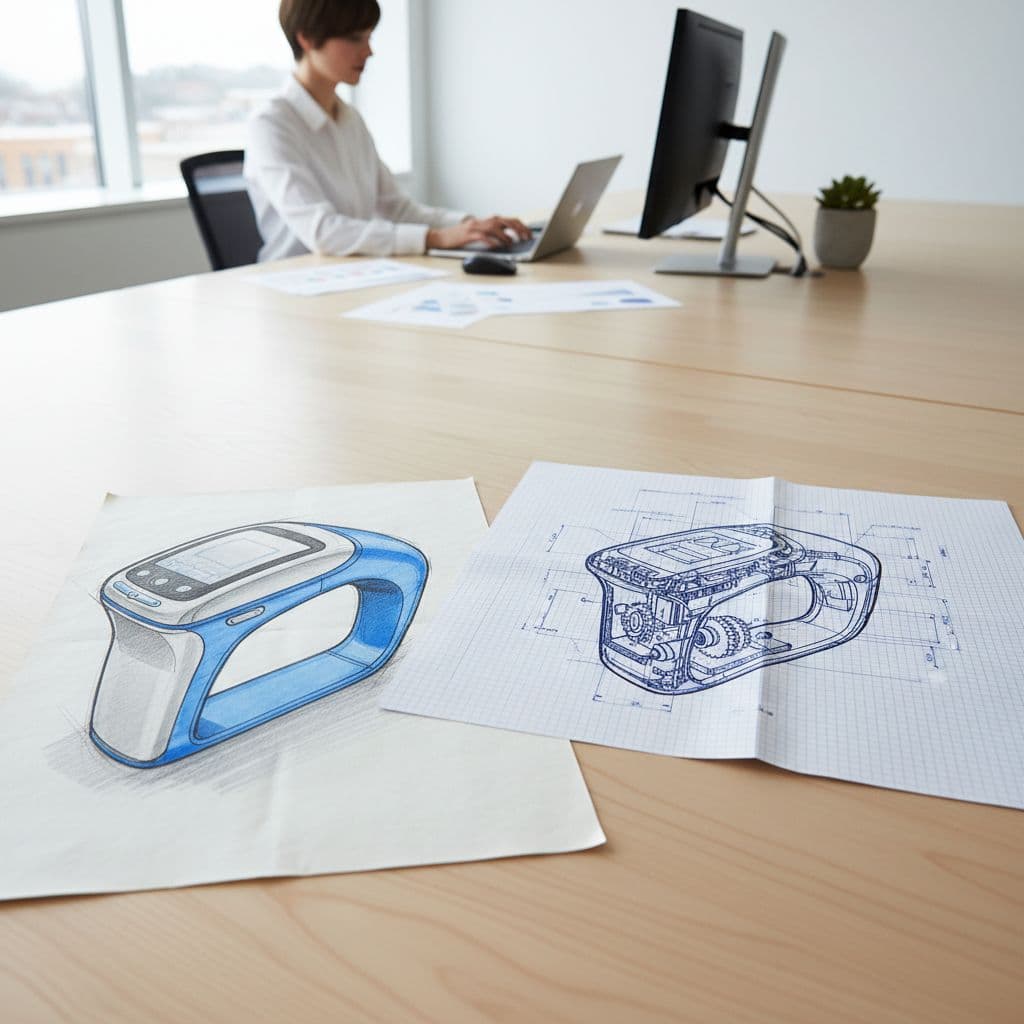
Design protection can apply to a curved housing, a distinctive handle contour, a surface pattern, an icon-like shape on a product body, or a unique arrangement of visible lines. In simple terms, if a buyer can see it and that look is new, it may be worth reviewing.
Still, not every visual feature qualifies. The design must be new, and it can't be a standard look buyers expect to see on similar products. A design patent attorney can help us separate truly distinctive styling from features that are driven mostly by function. That's important because the drawings in a design filing do much of the work in defining what is covered. This explanation of design patent drawings gives a useful outside view of that issue.
Why product appearance has business value
Appearance can shape buying decisions, especially when products sit side by side in a catalog, at a trade show, or in a distributor's lineup. Tool housings, wheelchair frames, medical device casings, and visible automotive components often compete on first impression as much as technical specs.
Because of that, a design patent can support branding and make imitation harder. If a rival copies the look that buyers associate with our product, the damage isn't only cosmetic. It can weaken market trust and blur the identity we've spent time and money building. For product companies, visual protection is often a business asset, not a legal extra.
What utility patents protect, and why they often carry more weight
A utility patent protects how an invention works, what it does, or how it is used. That makes it the main choice for mechanical features, technical systems, manufacturing methods, and useful improvements that change performance.
For many innovators, utility claims are the core protection because they can block others from copying the function, even if a competitor changes the shape or appearance. Good patent attorney services help us build a filing plan that matches the invention, the market, and the budget, rather than forcing every product into the same template.
Common examples of utility patent protection
In practice, utility protection may cover a safer locking feature on a construction tool, a medical device mechanism that improves delivery or control, a vehicle part that reduces heat or wear, a wheelchair adjustment system that improves fit, or a defense component with a new mechanical advantage.
The common thread is performance. We are protecting the useful idea behind the product, not the way it looks on a shelf. A practical patent comparison makes the same distinction in plain language, and it mirrors what most product companies see in the real world: function-based claims usually form the backbone of patent protection.
Why utility claims need careful drafting
Utility patents can be stronger, but they are also easier to weaken with rushed drafting. If the claims are too narrow, competitors may avoid them with a small design change. If they are vague, they may not hold up well when challenged.
Careful claim drafting can support enforcement, licensing, and long-term product value. It can also leave room for future versions, line extensions, and small engineering updates. By contrast, a quick filing built around only the first version of the product may miss the variants we plan to sell next year. For companies that expect growth, that gap can be expensive.
How we decide between design and utility protection
The right answer depends on what is new and what competitors are most likely to copy. Budget and timing matter too. Design filings are often a simpler first step, while utility filings usually take more drafting work and more back-and-forth during prosecution.
This quick comparison helps frame the choice:
- Design patentWhat it protects: Visual appearance
- Best fit: The look drives recognition or sales
- Utility patentWhat it protects: Function, structure, or use
- Best fit: The mechanism or performance is new
- BothWhat it protects: Look and function
- Best fit: The product stands out on both fronts.
This makes one point clear: many products don't fit neatly into one box.
If competitors can copy both the look and the function, one filing may leave too much exposed.
Questions we should ask before filing
Before we file, we should pressure-test the product with a few simple questions:
- Is the main value in the appearance, the function, or both?
- What will a competitor copy first, the outer design or the working feature?
- Are we planning to license the invention or use it to support funding?
- Could the product change after launch, with new versions or added features?
- Are we about to show it publicly at a trade show, demo, or customer meeting?
Those answers shape the filing order and the budget. They also help us avoid spending money on the wrong layer of protection.
When both patents work better together
Many hardware products need both forms of protection. A medical device may have a new outer housing that helps users hold it correctly and an internal mechanism that improves performance. An automotive part may combine a distinctive visible form with a new heat-management feature. A wheelchair product may win buyers through both its visible frame design and its adjustment system.
In those cases, the design patent protects the look, while the utility patent protects the technical idea behind it. That layered approach raises the cost of copying because a rival has to work around more than one barrier. This note on using both patent types supports the same practical takeaway.
Why industry-specific patent strategy matters for product companies
Patent planning is never one-size-fits-all. The right mix depends on the product, the buyer, the sales cycle, and the way copycats tend to enter that market. That's why patent attorney services are most useful when they are tailored to the industry instead of treated like a generic filing process.
How design and utility priorities can shift by industry
Medical device companies often need both types of protection because device function matters, and so does the visible form clinicians handle and recognize. Automobile parts manufacturers may care most about performance, but visible part styling can still matter in replacement or aftermarket sales.
Construction tool makers often focus on safer operation, grip geometry, and usable improvements. Wheelchair manufacturers may need protection for mobility function as well as the user-facing design that supports comfort, trust, and product identity. Military equipment companies usually lean hard on technical protection, yet visible configuration and compliance-aware planning can still shape the filing strategy.
Why early legal review can prevent costly mistakes
Waiting too long can shrink our options. A public launch, sales meeting, trade show reveal, or investor deck can complicate later filings if we haven't reviewed the product first. That risk grows when teams move fast and engineering keeps changing right before launch.
Early review helps us sort invention disclosures, decide whether a provisional filing makes sense, and plan around product updates. It also helps us avoid claims that are too narrow or design filings that focus on the wrong visual features. For startups and large manufacturers alike, that early work can save time, money, and stress later.
Conclusion
The split is simple, even if the filing choice is not. Design patents protect how a product looks, and utility patents protect how it works. Many product companies need both because buyers notice both, and competitors often copy both.
Before we file, we should identify the features that drive recognition, performance, and revenue. That's where experienced patent attorney services make a real difference, because a clear filing plan protects the product we have now and the business we want to build next. Contact Milano IP to discuss the right patent strategy for your product.
Get a Free Case Evaluation
Tell us your details and we'll get right back to you.
Blog Contact Form
Like our article? Share our Article!